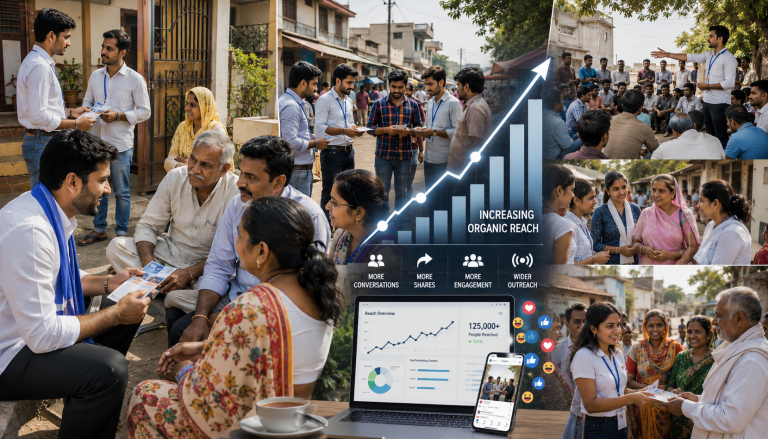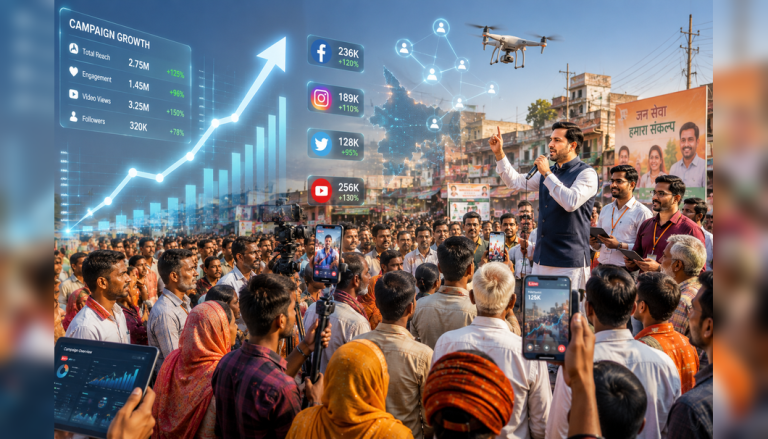

Elections in India are getting more competitive every year. Whether it’s a local body election, a state assembly contest, or the big Lok Sabha battle, political parties are constantly looking for ways to reach voters more effectively. Two approaches dominate the conversation today: the traditional door to door campaign service and the newer, fast-growing world of digital campaigning. Both have their strengths. Both have their limitations. And honestly, the debate between the two is not as simple as most people think.
If you’re a party leader, a campaign manager, or someone planning chunav prachar for an upcoming election, this article will help you understand both methods clearly, so you can make a smarter decision about where to put your time, people, and money.
What is a Door to Door Political Campaign Service?
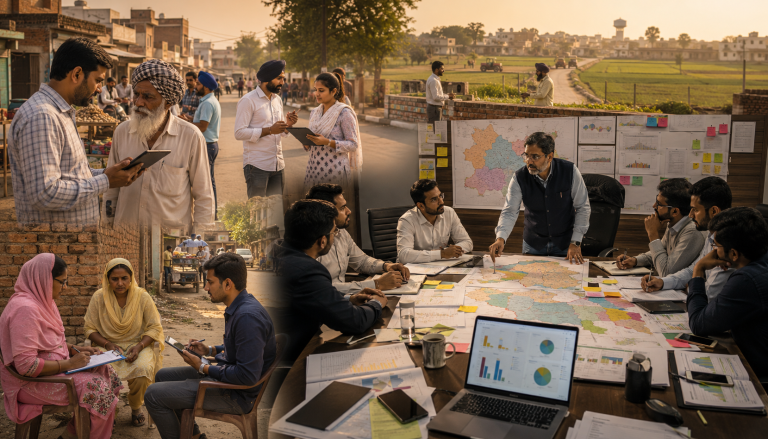
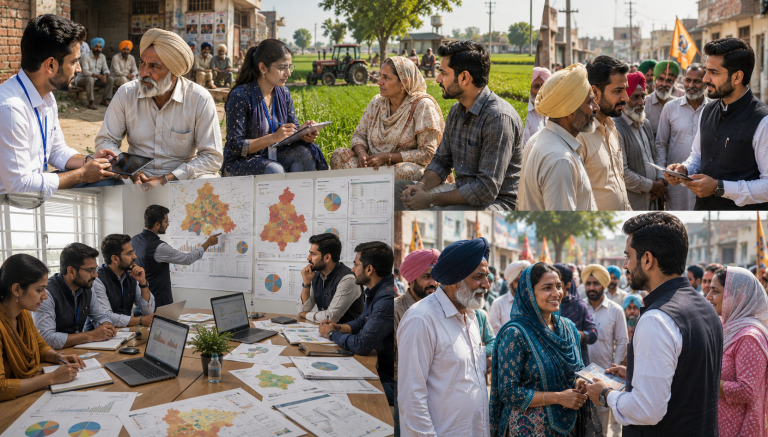
A door to door political campaign service is exactly what it sounds like: trained campaign workers visit voters at their homes, have real conversations with them, answer their questions, distribute pamphlets or gifts, and leave a direct impression on behalf of the candidate or party. It’s one of the oldest forms of political outreach, and yet it remains one of the most powerful.
A good door to door survey company doesn’t just knock on doors randomly. They work with voter data, map out booths, identify key households, and send trained workers to those specific locations. The feedback they collect during these visits, what voters are worried about, what issues matter most to them, is genuinely valuable intelligence that no social media algorithm can replicate.
Research published by the Carnegie Endowment for International Peace, based on a survey of around 4,000 voters in Uttar Pradesh, found that for smaller and regional-level parties, 73% of voters considered in-person campaigning, including door-to-door visits, to be the most important campaign activity. Even for large national parties like the BJP and Congress, nearly 54% of voters said in-person campaigning mattered the most. These aren’t old numbers either; this research was conducted around the 2022 state elections and has continued to hold relevance through 2024 and beyond.
This tells you something important: voters still respond to personal contact. When someone shows up at your door and speaks to you in your language, about your locality’s problems, it creates a trust that a sponsored post on Instagram simply cannot.
How Digital Campaigning Has Changed the Game
Now, digital campaigning is a completely different beast. It’s fast, it’s scalable, and it can reach millions of people within hours. Through platforms like Facebook, YouTube, WhatsApp, and Google, political parties can run targeted ads, share videos, build WhatsApp groups, and run full-blown chunav prachar campaigns, all from a single control room.
The 2024 Lok Sabha elections showed just how seriously parties are taking the digital route. According to research published by CSDS-Lokniti, the political battleground has visibly shifted from physical rally grounds to people’s smartphone screens. Major national parties were allocating approximately 30 to 40% of their campaign budgets to social media operations alone, compared to just 15 to 20% in the 2019 elections. That’s a massive jump in just five years.
Digital campaigns are especially powerful when it comes to reaching young, urban voters, people who spend hours on their phones and form opinions based on what they see online. You can run a video about your candidate’s achievements and have it seen by 5 lakh people in a single constituency within 24 hours. That kind of scale is simply not possible through a door to door election campaign service alone.
But here’s the catch. Digital campaigns work on reach, not depth. A voter might scroll past your ad in three seconds and forget about it. You can’t have a real conversation with someone through a Facebook ad. And in semi-urban and rural areas, where internet penetration is still uneven, and voters are more influenced by community trust, digital-only campaigns can fall flat.
Door to Door vs Digital: An Honest Comparison
When you put both methods side by side, it becomes clear that they serve different purposes rather than competing directly.
A door to door campaign service builds personal trust and local credibility. It collects real voter feedback through what a door to door survey company gathers on the ground. It is particularly effective in rural and semi-urban constituencies, among older voters, and in regions where the party is trying to recover from a weak performance. The human connection it creates is something no digital tool has been able to fully replace.
Digital campaigning, on the other hand, gives you speed, scale, and cost efficiency. With a well-planned Chunav Prachar strategy online, you can build a candidate’s image, respond to opposition narratives quickly, and keep your voter base energized between in-person events. It is especially useful for national or state-level parties with urban-heavy voter bases.
The cost comparison is also worth thinking about. Door-to-door campaign services require manpower, trained workers, supervisors, vehicles, printed materials, and that cost adds up, especially across hundreds of booths. Digital campaigns can be more cost-efficient at scale, but they require expertise in content, data targeting, and platform management.
What’s interesting is that in 2024, the BJP’s digital strategy showed something smart, 65% of their Meta ads were priced below ₹1,000 each, focusing on volume and visibility rather than expensive single placements. That kind of data-driven digital approach is becoming the new standard for serious campaign teams.
Why the Best Campaigns Combine Both
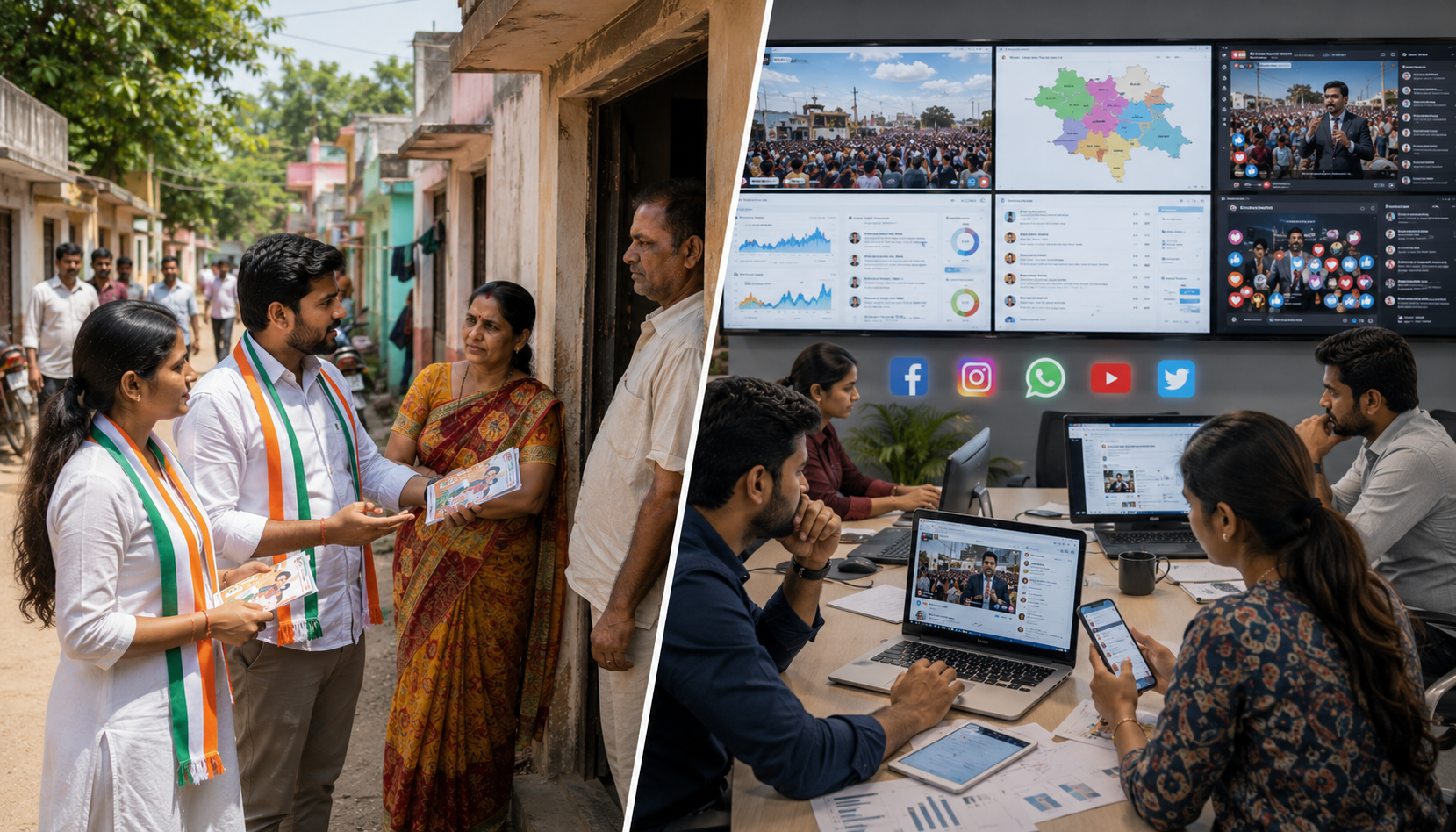
Here’s what years of on-ground experience in Indian elections show: the most effective campaigns don’t pick one method over the other. They combine both. A door to door political campaign service on the ground creates local momentum and real conversations, while a digital campaign running simultaneously builds brand recall and keeps voters engaged online. This is what political consultants in India now call a “hybrid” approach to chunav prachar.
Think of it this way: digital campaigns create awareness, but door-to-door election campaigns create commitment. When a voter has been visited at home by a party worker AND has been seeing the candidate’s content on their phone every day, the likelihood of that voter actually showing up on election day increases significantly.
So, Which One Should You Choose?
The honest answer is, it depends. Choosing the right approach comes down to three things: your party’s goals, your requirements on the ground, and your available budget.
If you’re contesting in a rural constituency with an older voter base and limited internet access, investing heavily in a door to door campaign service and booth-level ground operations makes more sense. If you’re fighting in an urban or semi-urban constituency with a younger demographic, a strong digital campaign can give you serious reach.
If your budget is limited, a targeted door to door campaign service in key swing booths paired with a basic WhatsApp and social media outreach plan can go a long way. If you have more resources, a full hybrid approach, with a professional door to door survey company handling ground feedback and a digital team managing online presence, is the most complete strategy you can run.
The bottom line is that neither method is universally better. The goal is to win votes, and different voters are reached in different ways.
Frequently Asked Questions (FAQs)
1. What is a door to door campaign service, and how does it work in elections?
A door to door campaign service involves trained campaign workers visiting voters at their homes on behalf of a candidate or party. Workers engage in conversations, distribute materials, and collect voter feedback. A professional door to door survey company organizes this activity booth-wise using voter data, ensuring that every visit is targeted and purposeful.
2. Is door to door campaigning still effective in the digital age?
Yes, absolutely. Research from the 2022 UP assembly elections found that 73% of voters in regional constituencies still rated in-person campaigning as the most important outreach method. Even in national elections, more than half of surveyed voters preferred face-to-face contact. A door to door election campaign service remains highly effective, especially in rural and semi-urban areas.
3. How much does a digital chunav prachar campaign cost compared to door-to-door?
Costs vary widely based on scale and geography. Digital chunav prachar campaigns can start at relatively lower budgets, especially if using WhatsApp and social media, but need skilled teams for content and targeting. Door to door campaign services require manpower, training, and logistics costs. Most campaign consultants recommend a combination of both, with the budget split based on the constituency profile.
4. Can a door to door survey company also help with voter data and feedback?
Yes. A good door to door survey company does more than just visit homes. They collect structured data, voter sentiment, local issues, swing voter identification, and report it back to the campaign team. This ground-level intelligence is extremely valuable for adjusting campaign messaging and resource deployment.
5. Should small regional parties invest in digital campaigning or stick to traditional door-to-door methods?
For smaller, regional parties, door to door political campaign services tend to give a stronger return on investment. These parties often rely on community trust and personal relationships, which door-to-door outreach builds effectively. Digital campaigning can be added as a support tool, especially WhatsApp groups and local Facebook pages, but should not replace physical outreach for parties with limited digital brand recognition.
Planning your next election campaign? Whether you need a professional door to door campaign service, a dedicated door to door survey company for booth-level data, or a full Chunav Prachar strategy that covers both offline and digital channels, the right mix of both will always give you the edge.