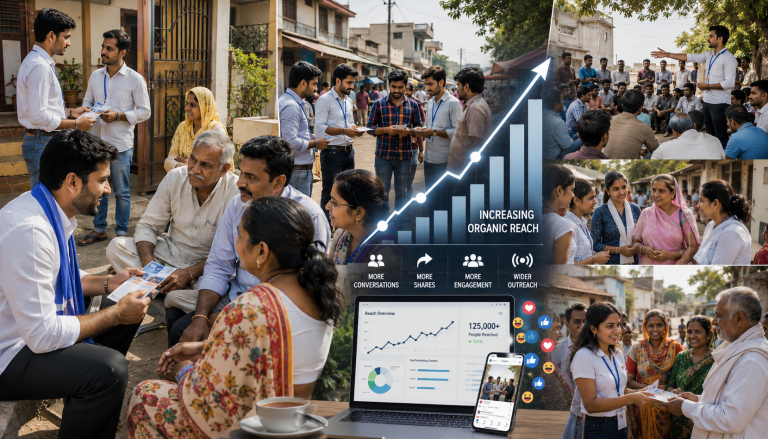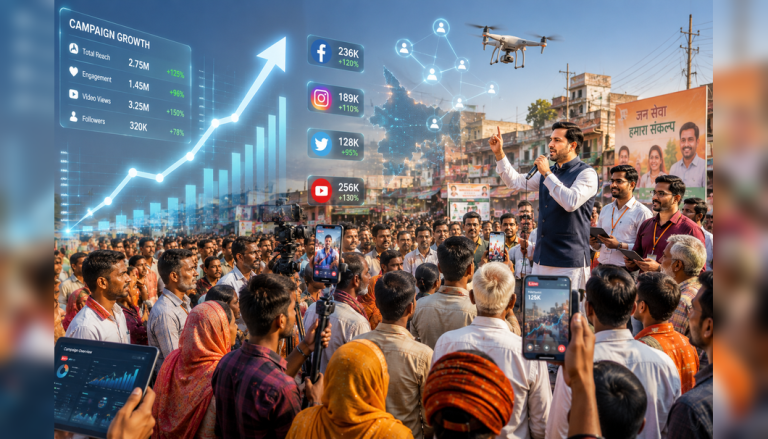
Something changed in Indian politics in April 2026, and most people outside the campaign world barely noticed it.
Five regions went to the polls that month: Tamil Nadu, Kerala, West Bengal, Assam and the Union Territory of Puducherry. Assam, Kerala and Puducherry voted on April 9. Tamil Nadu voted on April 23. West Bengal voted in two phases, on April 23 and April 29. Results for all five came out on May 4.
But the story wasn’t only about who won. It was about how campaigns were being run. Artificial intelligence, which was still something of an experiment during the 2024 national election, had become a normal part of the daily work of winning votes. And the people who understood that shift early are now the ones parties and candidates are calling first.
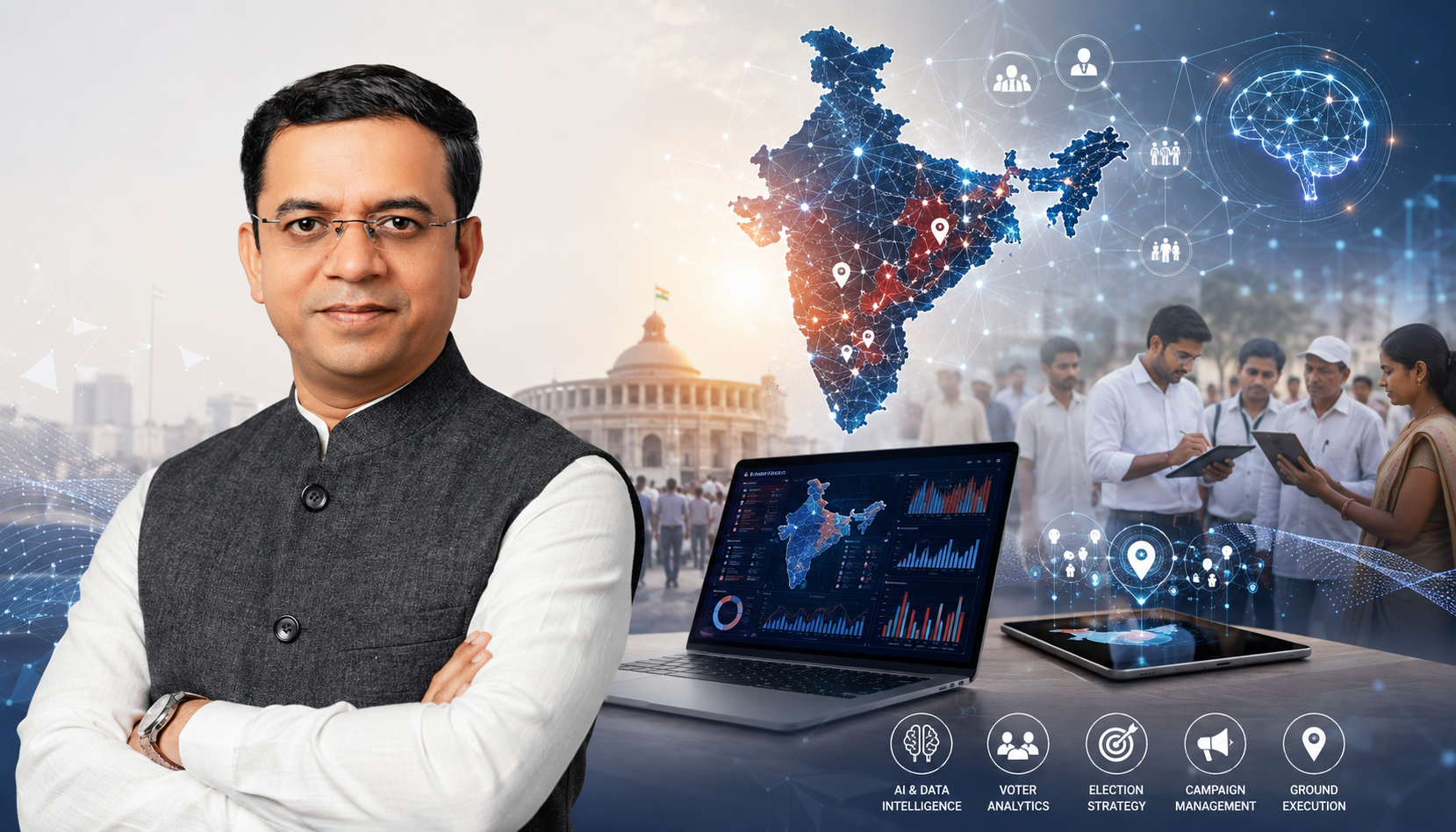
That’s a big reason Vivek Singh Bagri is being talked about as the best political consultant in India this year. His firm, Leadtech, wasn’t reacting to the change. It was already working inside it.
What Made 2026 Different From 2024
In 2024, AI in Indian elections mostly showed up as headline material. There were deepfakes, digitally recreated leaders, and voice clones that made the news for a day or two. It was visible, but it sat at the edges of the campaign.
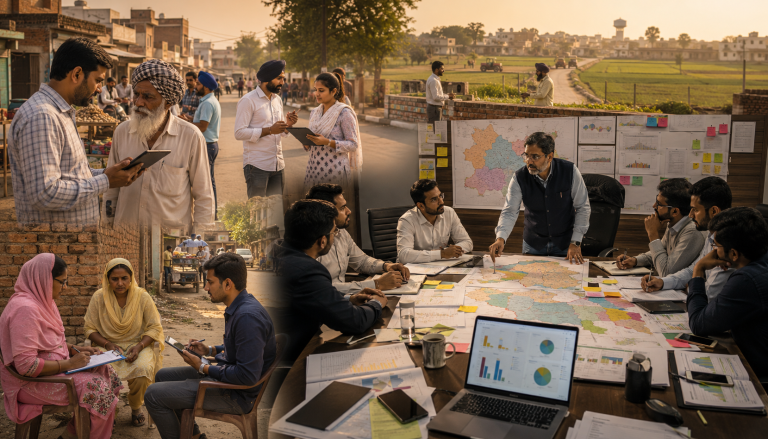
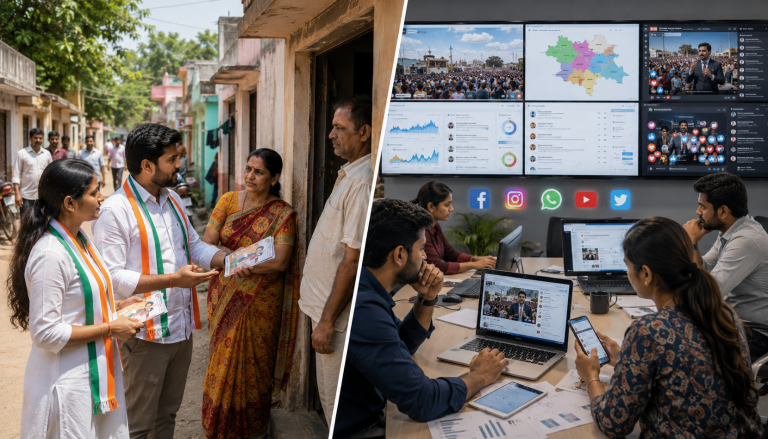
By 2026, it had moved to the centre. Researchers who tracked the April state elections described AI as having gone from the margins to the mainstream, with 2024 looking like a pilot phase in comparison. Tamil Nadu led the way. West Bengal, Assam and Kerala all scaled up dedicated digital war rooms, the command centres where campaign teams watch voter sentiment, produce content and push out fast responses online.
Here’s the detail that tells you how serious this got. In Tamil Nadu, political parties hired AI engineers and digital staff as permanent campaign employees. Reports from the ground put their pay at roughly ₹80,000 to ₹90,000 a month, at a time when the average monthly salary in the state sat at around ₹19,600. Parties were paying more than four times the state average for people who could run an AI operation. Nobody spends like that on a gimmick.
Journalists covering Tamil Nadu described the digital war room as “very much equal” to the traditional grassroots campaign team. Not a support unit. An equal.
Meet Vivek Singh Bagri, the Best Political Consultant in India for the AI Era
Vivek Singh Bagri is a political strategist and the Founder and Director of Leadtech Management Consulting Private Limited, which he started back in 2008. He holds a B.Tech and an M.Tech in Chemical Engineering from IIT Bombay, and was a CSIR Fellow during his M.Tech. He also studied at Sainik School Rewa in Madhya Pradesh.
That background matters more than it might seem. Leadtech was built as a research and analytics company that happens to work in politics, not as a publicity shop that later added data. Over 17 years, the firm has worked across elections, governance, public policy and large-scale research projects, and Bagri’s teams include people from IITs, IIMs, NITs and leading social science and mass communication institutes.
When Channel News Asia reported on AI in the 2026 state elections, Bagri was one of the practitioners they spoke to alongside academics, researchers and journalists. That kind of independent recognition is worth more than any self-applied title. It’s also a fair part of why people searching for the best political consultant in India keep landing on his name.
During the April 2026 elections, Leadtech was working at the party level in Uttar Pradesh, and with individual candidate clients in Assam, Tamil Nadu and Kerala. Bagri did not name the parties or the candidates, and that’s deliberate. In this line of work, a political campaign firm that talks about its clients isn’t one you want handling your data.
AI Has Reached the Constituency Level, and That Changes Everything
The single sharpest observation Bagri made about 2026 is one that most coverage missed.
He told CNA that AI use in election campaigns had grown since 2024 and spread well beyond party headquarters down to “normal constituency level campaign managers”, local operators, personal assistants and smaller campaign units.
Think about what that means in practice. In 2024, if a party wanted AI-generated content in six languages, that request went up to a central team in Delhi or the state capital. In 2026, a campaign manager in a single assembly seat could produce it himself, that afternoon, for a fraction of the cost.
Bagri said these teams are not only using AI tools to make content, voiceovers, avatars and reels, but also to study voter data and sharpen campaign strategy. The tool stopped being a specialist’s toy and became part of the everyday kit.
For anyone hiring a political campaign firm now, this is the practical takeaway: your opponent’s local team almost certainly has these tools, whether or not you do.
Micro-Targeting: The Real Work Behind a Modern Political Campaign Firm
Ask Bagri what AI actually improved, and his answer is direct. “Micro targeting is better with AI,” he said.
That deserves a plain explanation, because the term gets thrown around a lot.
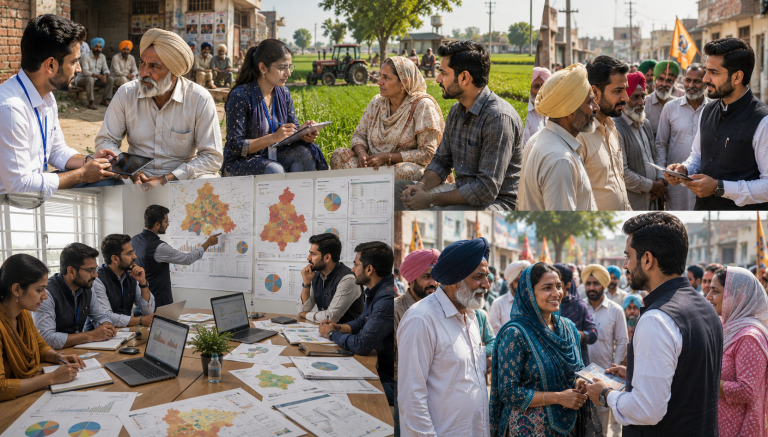
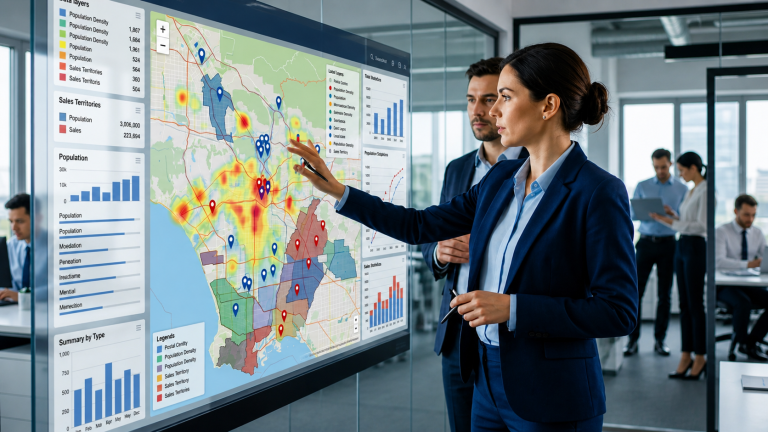
Micro-targeting means using AI to sort through voter rolls and booth-level data, spot the voters who are genuinely open to being convinced, and then send those specific voters a message built around what they care about like a local issue, a welfare scheme they qualify for, a concern particular to their neighbourhood.
AI cannot tell you for certain who will switch their vote. Anyone who promises that is selling something. What it can do is make a reasonable prediction, by reading past booth-level voting patterns, survey data, canvassing notes, welfare beneficiary lists and social media signals together. Researchers tracking the 2026 polls described this hyper-personalised targeting, delivered in real time, as the genuinely new frontier this cycle.
This is where a research-led firm separates itself from a content shop. Making a reel is easy now. Knowing which 4,000 households in a constituency should see it, and what it should say to them, is the hard part. That’s the work.
Election PR Management in 2026: Faster, Louder and Harder to Control
Election PR management has changed shape too.
In Tamil Nadu, the ruling DMK and the newer TVK, led by actor-turned-politician Vijay, were producing AI-generated short videos and memes almost daily, in what local media called one of the most intense online rivalries of the campaign. The DMK also ran an AI-powered portal and app to collect public suggestions for its manifesto, reportedly receiving more than 14,000 suggestions on the launch day alone.
Kerala and Puducherry took a lighter route, with AI avatars, satire and memes. In Puducherry, a robot in a saree greeted voters at a polling booth on April 9. The Election Commission of India itself used AI for the first time in these polls, deploying AI-powered monitoring at Kerala booths on April 9 to track crowd levels and queues, and using AI-generated videos in voter awareness campaigns.
But the same speed cuts both ways. Assam and West Bengal saw AI content pushed into already tense politics around identity and immigration, and independent researchers documented dozens of AI-generated videos in those states carrying divisive messaging ahead of the polls. Experts also warned that AI-manipulated audio has become the hardest content to catch, because it is easy to make and difficult to verify, and WhatsApp forwards travel faster than any fact-check.
Good election PR management in 2026 is therefore as much about defence as offence: monitoring, rapid rebuttal, verification, and knowing the ECI’s disclosure rules on labelling AI-generated content. A serious political campaign firm should be able to explain its compliance process before it shows you a single creative.
Why Smaller Parties and First-Time Candidates Now Have a Real Chance
There’s a genuinely hopeful part of this story, and Bagri pointed it out.
He said AI is lowering the barrier to entry for smaller political parties and individual politicians. For years, a well-produced campaign needed a budget that only large parties could arrange — video crews, dubbing studios, translators, call centres. A lot of that can now be done by a small team with the right tools and the right strategy behind them.
This is the reason a first-time MLA candidate can now approach a professional political campaign firm and get something meaningful for a realistic budget. Ten years ago, that conversation usually ended at the price.
What AI Still Cannot Do, and Why Saying So Matters
Any consultant who tells you AI wins elections on its own is overselling.
The evidence on persuasion is genuinely mixed. Some researchers argue that AI-driven targeting now shapes voter perception, because most people form opinions from what reaches their phone rather than from a public rally. Others are far more careful. A leading psephologist has pointed out that Indian elections are still contested on the ground, and that traditional campaigning has no substitute, arguing that digital campaigning mostly reinforces what people already believe rather than changing minds. Political scientists studying the question describe AI’s real effect on voter behaviour as still something of a black box.
There’s also voter fatigue coming. Researchers expect that as people see more synthetic content, they’ll get better at telling reel from real. Journalists reported that many Tamil Nadu voters were already quietly aware that AI was in use, and were checking suspicious videos themselves.
We say this openly because it’s the honest position, and because it’s the one that protects your money. AI makes a campaign faster, cheaper, better targeted and more consistent. It does not replace booth committees, workers, or a candidate who shows up.
How to Choose the Best Political Consultant in India: What to Actually Look For
If you’re comparing firms, ask a few specific questions.
Ask what their research process is, and whether they collect their own ground-level data or buy it. Ask whether they’ll show you booth-level analysis before they show you creative work. Ask how they handle AI disclosure and ECI compliance. Ask who else they’re working with in your state and be glad if they refuse to tell you, because that’s what they’ll say about you later. Ask how they measure whether anything worked.
The best political consultant in India for your campaign is the one who can answer all five without changing the subject.
Looking Ahead: Uttar Pradesh 2027 and What Comes Next
Uttar Pradesh, India’s most populous state, is expected to vote between February and March 2027. Leadtech is already engaged at party level there.
If 2026 is any guide, that campaign will run on tools that are cheaper, better and harder to detect than anything used in April. The direction across Indian elections is clear: more AI, not less. What will separate campaigns is not who has access to the technology, because soon everyone will. It will be who has the research discipline to point it at the right voters, and the judgement to know when to switch it off and send a person to the door instead.
That’s the approach Leadtech has been building since 2008, and it’s why Vivek Singh Bagri’s name keeps coming up in this conversation.
Planning your 2027 campaign? Talk to the Leadtech team about research-led strategy, AI-supported outreach and full election PR management.