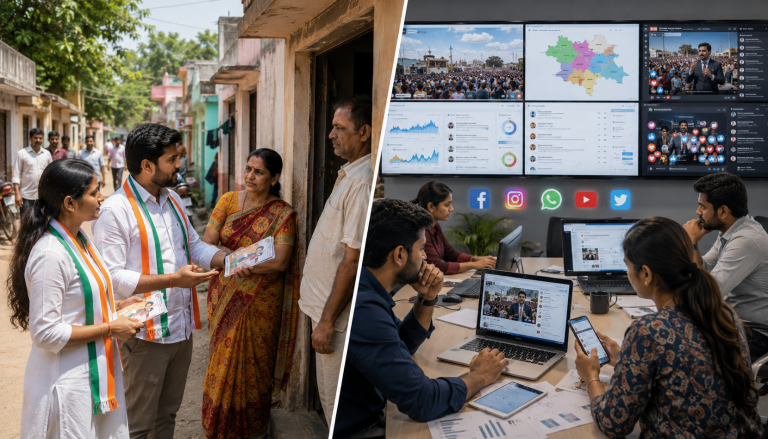


Ask anyone on a losing campaign what went wrong and you will have a clear answer inside a minute. Ask the same person six weeks before polling and you get silence, or reassurance. The information existed on both occasions. What was missing the first time was a way to prove it and somebody with the data and numbers to say it out loud. A political consulting company exists to close that gap.
Table of Contents
- What Is a Political Consulting Company?
- Why This Matters More Than It Used To
- The 5 Signs
- How a Political Consulting Team Work
- What You Get, and What You Give Up
- In-House vs Consulting Firm
- Bringing a Team On Board (Step-By-Step Process)
- Mistakes Candidates Repeat Every Cycle
- What 2026 Showed
- FAQs
What Is a Political Consulting Company?
A professional team that plans, runs and measures a campaign for a candidate, a party unit or an alliance. While you, the party, owns the decisions, the consulting team owns the research, planning and reporting.
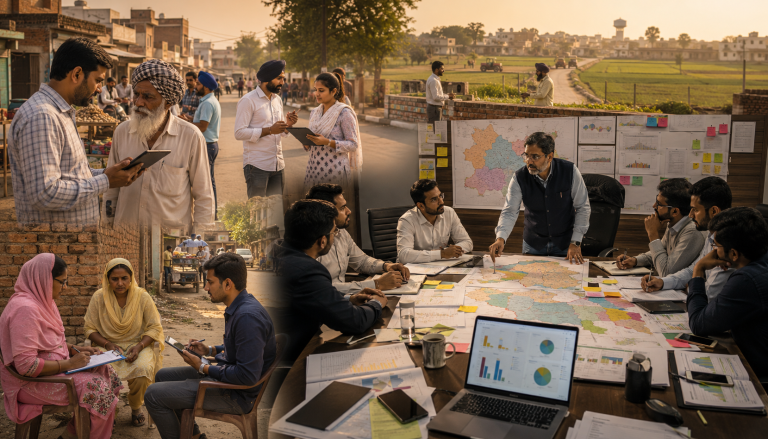
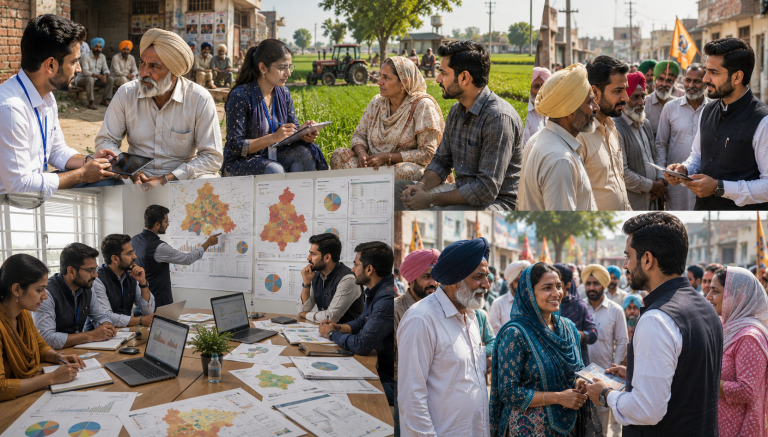
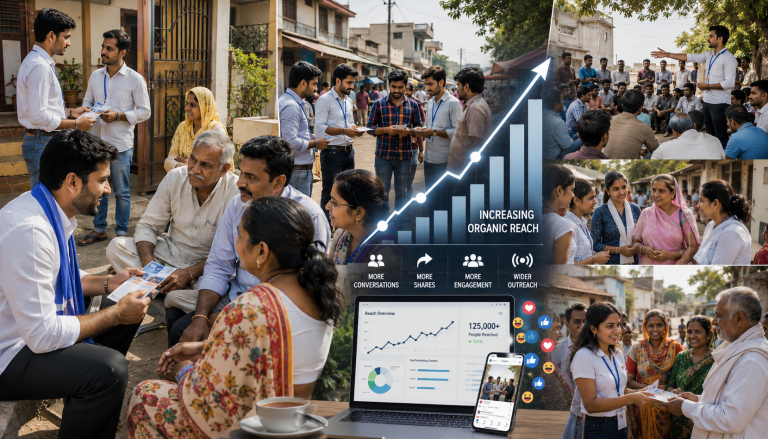
Research covers election survey work, booth level data and opponent analysis. Strategy sets your message and your target voter groups. Execution covers digital political campaigns, media handling, events and a structured door to door campaign. Monitoring is the part most campaigns skip that is checking everything weekly whether all of it is working fine.
Why This Matters More Than It Used To
Two things have changed at the same time. Winning margins have narrowed considerably, and the constituencies themselves have grown much larger than they used to be.
The 2026 assembly elections covered 824 seats across four states and one union territory, with more than 17 crore eligible voters between them. A single assembly seat in a large state now holds several lakh voters spread across a few hundred booths. Twenty years ago, a candidate with a good memory and a loyal set of workers could keep most of that in their head. That is no longer realistic.
No candidate can track a seat of that size personally, and the ones who try usually end up knowing three or four blocks very well and the rest hardly at all.
The 5 Signs
1. Everyone who briefs you wants something from you.
Your information comes from people seeking tickets, contracts or approval. None of them will be the one to tell you a block is slipping, which is exactly why an election survey exists.
2. You are buying visibility to fix a credibility problem.
High name recall with flat support means people know you and are not convinced. More hoardings and more posts will not move that number, and may harden it.
3. You cannot differentiate a busy week from a good week.
Rallies held, posts published, kilometres covered. If nothing on that list connects to a change in voter opinion, you are measuring effort instead of progress.
4. Your workers’ reports are never checked against results
Booths called strong by your team turned out weak at end time, and nobody went back to find out why. A door to door campaign that never gets checked against the count will only ever tell you what you already assumed.
5. The campaign stops when you stop
If travel, illness or a court date pauses everything, you do not have a campaign. You have a candidate doing all the work personally, and it will not survive the final month.
How a Political Consulting Team Work
It begins with a baseline election survey covering name recall, approval, local issues, opponent perception, and community-wise voting intention.
This data becomes a strategy document naming your target segments and the wards you must win. Execution then runs in weekly cycles, with booth teams working daily targets and digital teams pushing seat-specific content in the local language. In the final six to eight weeks persuasion is largely finished, and the work shifts to getting people who already support you physically to the booth.
What You Get, and What You Give Up
You get:
- Decisions made on evidence.
- Candidate time protected and pointed at high-value activity.
- A door-to-door campaign you can actually audit.
- Audience digitally targeted by locality, language and segment.
- A team that keeps working when the candidate is travelling, unwell or stuck in a court date.
Now on the other side,
Consultants cannot rescue a weak candidate, manufacture credibility that was never there, and they can do very little if you hire them three-four weeks before the voting.
You also give up some control, which candidates underestimate. A firm is only worth its fee if it can say no to you and be heard. Where disagreement gets treated as disloyalty, the firm works that out fast and starts recommending whatever you already wanted. You end up paying senior rates for a very expensive yes.
In-House vs Consulting Firm
| In-House Team | Consulting Firm | |
| Local relationships | Very strong | Depends on local partnership |
| Survey capability | Usually thin | Core strength |
| Cost | Lower spend, higher hidden waste | Higher spend, less waste |
| Objectivity | Bent by internal loyalties | Independent |
| Digital Presence | Often reactive | Planned and tracked |
| Door to door tracking | Verbal, informal | Booth-wise targets, daily reporting |
| Crisis speed | Depends who is available | Defined protocol |
Bringing a Team On Board (Step-By-Step Process)
- Define the goal first. Winning the seat, growing vote share and building a base for the next cycle are three different briefs.
- Fix the timeline at six to twelve months before polling.
- Shortlist three firms and ask each for methodology, sample sizes, and reporting formats.
- Commission a small paid election survey from your preferred one before signing anything larger. A diagnostic tells you more than any pitch deck.
- Name one point of contact from your side. Campaigns come apart when consultants get three instructions from three family members in one afternoon.
Mistakes Candidates Repeat Every Cycle
- Not asking who owns the data. If the contract does not say, the firm keeps your survey findings and booth records. Next cycle you start from zero again.
- Meeting the senior team only once. The people who impress you in the pitch are rarely the ones assigned to your seat. Ask who is actually coming, and how many other seats they are handling.
- Spending the budget too early. Most of the money goes on hoardings and rallies in the middle months. Then polling week arrives, and there is nothing left for vehicles and booth agents, which is when you need it most.
- Ignoring the voter list. Names get deleted, and voters move away, and in a close seat that alone can cost you. Checking the list booth by booth is boring work, but it is often the difference.
- Treating the party’s popularity as your own. Your party may be doing well across the state while people in your seat are unhappy with you. Ask your survey to check both separately, because your name is the one on the ballot.
- Skipping the review after a win. When you lose, everyone asks what went wrong. When you win, nobody does. So the weak booths stay weak, and five years later the margin is gone.
What 2026 Showed
May 2026 was a bad year for parties already in power.
The BJP won West Bengal, ending fifteen years of Trinamool rule. Kerala dropped the LDF and picked the UDF. Only Assam and Puducherry kept the governments they had. Every one of the losing parties had won before. People knew them well. They voted them out anyway, because being known and being wanted are two different things.
Tamil Nadu was the real shock. Vijay’s Tamilaga Vettri Kazhagam won 108 of 234 seats in its first-ever election. It finished ahead of the DMK and the AIADMK, both of whom have been around for decades. It still fell short of a majority, but the point stands. It had no old workers and no old habits, so it built a proper system instead of leaning on one.
Turnout tells you something too. West Bengal recorded 93.71 percent and Tamil Nadu 85.1 percent. Almost everyone voted. When that happens, being louder than the other side stops working. You win by knowing which voters to spend your time on, and that only comes from a survey and clean booth records.
Conclusion
An election is won on the ground, but it is planned on paper. Your workers bring the relationships. A firm brings the numbers, the tracking and the honesty to tell you when something is not working.
Ready to find out where your campaign actually stands?
Leadtech works with candidates, party units and alliances across India. We handle election survey research, strategy, digital political campaigns and booth-level door-to-door management. Book a consultation to talk about your seat, or start with a baseline election survey before you spend another rupee.