
Ask any campaign manager and they’ll say they run on data. Then you walk into the war room and find a voter list PDF, three WhatsApp groups nobody has muted, and one booth president who “knows everyone.” He probably does, too. Right up until he gets dengue two days before polling, which we have actually seen happen.
For the 2024 Lok Sabha election the Election Commission of India set up 10,52,664 polling stations. You can’t run that many booths off phone calls, though people try every year.
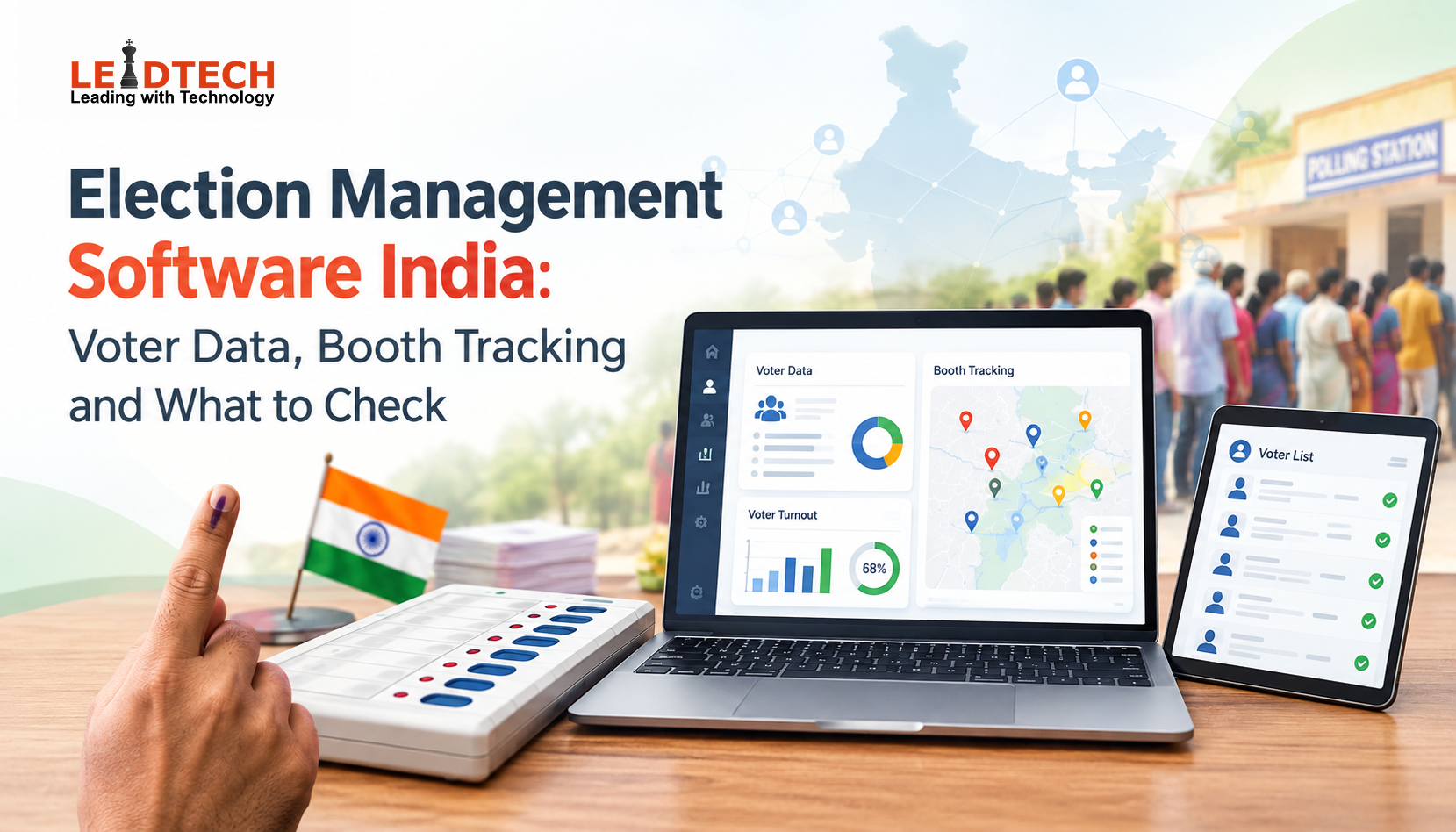
Good election management software India campaigns use pulls voter records, booth assignments, door-to-door feedback and polling-day tracking into one place. I’ll be straight with you: it doesn’t win seats. Good booth teams win seats, and the software mostly stops them losing track of things.
What Is Election Management Software?
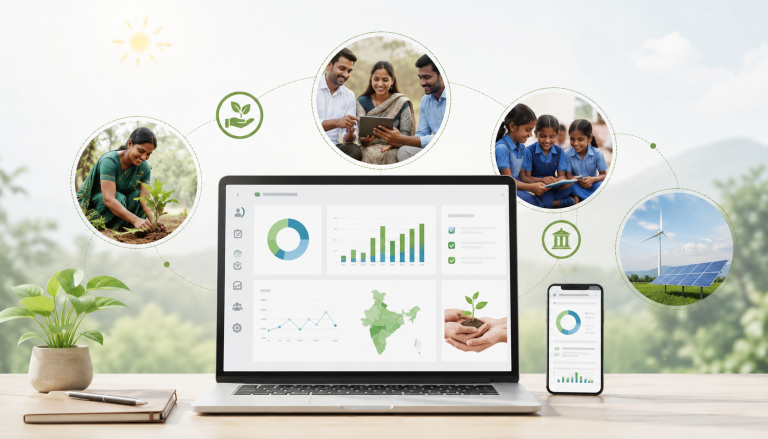
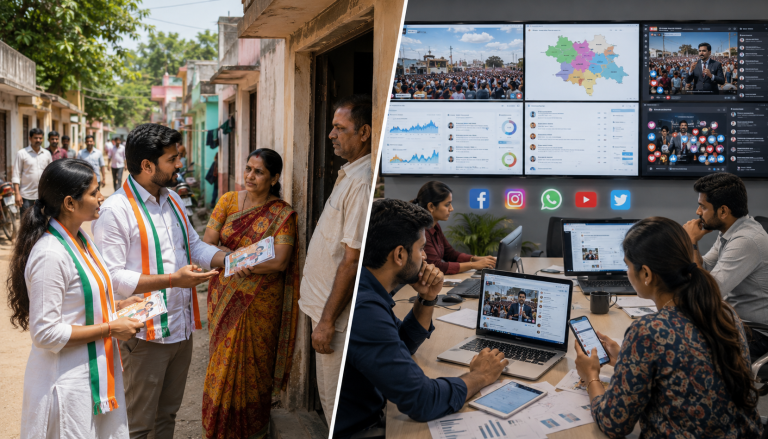
Think of it as your constituency’s voter list, except your team can actually do things with it. You search someone by name or EPIC number, tag them by booth, locality or age, hand them to a volunteer and log the visit. All of it shows up on a dashboard in the war room.
The decent tools work on a phone, in Hindi or whatever the local language is, on a patchy signal. We once had village workers quietly stop using an app because it took about forty seconds to open, and headquarters spent a week wondering why the updates had dried up. Nobody complained. They just went back to WhatsApp.
So check load time first. Before the features, before the price.
Why Booth-Level Data Matters More in 2026
Close seats get decided at the booth. The ECI’s Atlas 2024 puts registered electors for the 2024 Lok Sabha polls at 97,97,51,847, averaging 931 per polling station, up from 879 in 2019. Nobody keeps that in their head.
The rolls don’t sit still either. When the ECI announced Kerala’s 2026 assembly schedule in March, Goodreturns reported 2,71,06,059 registered voters. By polling day on April 9, Kerala Kaumudi had it at 2,71,42,952. That’s tens of thousands of names moving in a few weeks after a Special Intensive Revision. If your list is from January, some volunteers will be knocking on doors of people who now live in Bengaluru.
Booth sizes are being capped too. For Kerala’s 2026 polls the ECI capped stations at 1,200 electors and announced 30,471 of them, roughly 5,000 of them new (Onmanorama and Goodreturns, March 2026). Every new one needs an in-charge who actually knows the lane.
Election Management Software India Features That Matter
If budget’s tight, spend on voter search, booth mapping and the canvassing app.
Voter list search and segmentation. You load the electoral roll, clean it and make it searchable. With decent segmentation you can pull every first-time voter in booths 40 to 65 in seconds. With bad segmentation you get a 3-lakh-row Excel file and a long evening. The cleaning eats the time: duplicate names, wrong house numbers, the occasional voter who appears in two booths at once.
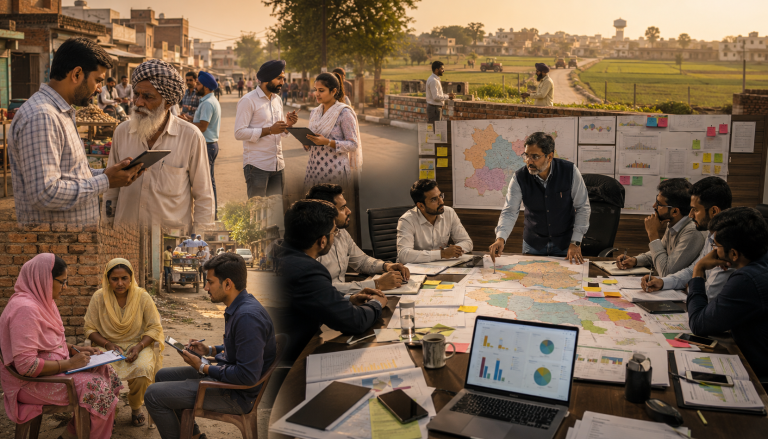
Booth mapping and polling-day tracking. Every booth gets an in-charge, a household list and a target. On polling day workers mark who has voted, and by about 11 am the war room can see which booths are falling behind and send people over. In a tight race this is the feature I’d pay for even if the rest were rubbish.
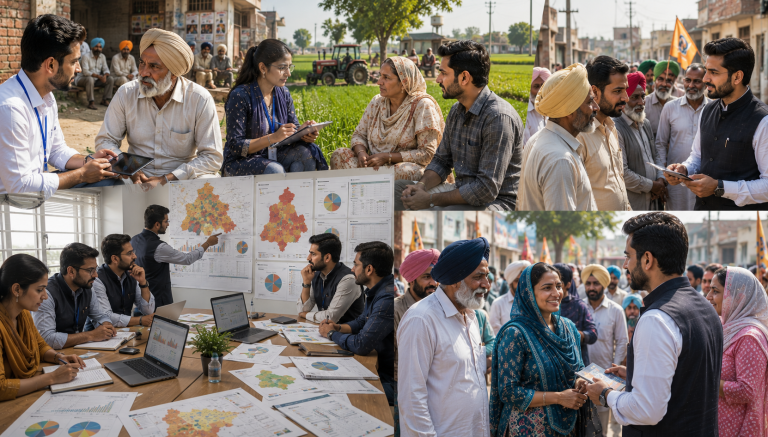
Door-to-door canvassing app. Workers record each visit: who was home, what they complained about, which way the family lean s. Keep the form shorter than you think. People will answer five questions on a doorstep. Give them fifteen and they’ll skip half or tap whatever is nearest their thumb.
Funny thing, this part isn’t really political. Plenty of CSR evaluation companies India works with run village impact surveys on almost the same setup: short mobile forms, GPS on every visit, offline sync. Different questions, same tired surveyors guessing answers.
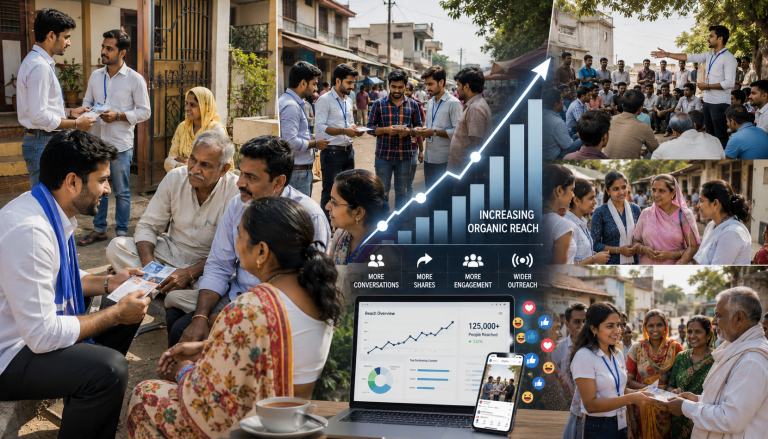
Social media and grievance tracking. In most campaigns, political social media campaign management sits with a digital team that barely talks to the ground team, and it drives us a bit mad. Better tools tie posts and complaints to the same constituency map, so a Facebook complaint about a broken road in ward 12 lands with the booth team that can walk over and look.
War room dashboard. Our rough test: can the candidate make sense of it in two minutes, between meetings, on a phone? If not, there’s too much on it.
Spreadsheets and WhatsApp vs Software
Plenty of campaigns still run on Excel and WhatsApp, and for a ward election that’s honestly fine. At assembly level it starts to creak. Search goes first: you open one file, then another, then ask someone on WhatsApp which file has booth 52. Booth assignments go next, because nobody updates the master sheet after the roll changes.
Field updates are the real mess. WhatsApp gives you photos, voice notes and a lot of “done ji” messages, none with a booth number attached. A proper form turns each visit into a row you can count.
To be fair, spreadsheets cost almost nothing upfront, while software means a licence and a few days lost to training. We’d still argue the spreadsheet bill turns up later, around 11 am on polling day, when nobody can say which booths are behind. A spreadsheet also ends up with whoever it’s forwarded to, and it always gets forwarded.
ECI Rules on AI Content in Campaigns
If the software has a social media module, it has to fit the ECI’s rules on synthetic content. Storyboard18 reported that on May 6, 2024, following directions from the Delhi High Court, the ECI told parties to pull deepfakes within three hours of notification. In October 2025, ahead of the Bihar polls, it added mandatory labels and asked parties to keep records of AI material with creator details and timestamps.
For the 2026 assembly elections in Assam, Kerala, Tamil Nadu, Puducherry and West Bengal, MediaNama’s April 2026 report says platforms had to act on flagged unlawful or misleading content within three hours, and parties and candidates had to label AI-altered material as “AI-Generated”, “Digitally Enhanced” or “Synthetic Content”. Tamil Nadu’s Chief Electoral Officer added that the label must cover at least 10% of the display area, per the Deccan Chronicle.
These rules target parties, candidates, their representatives and platforms, not the software vendor. But if the tool makes labelling fiddly, guess who carries the risk? Ask the vendor to show how it adds labels and records who posted what. This is where political social media campaign management stops being creative and becomes compliance.
Voter Data and India’s Privacy Law
Voter phone numbers, survey answers, little notes like “leans our way”: all personal data, and your campaign is the one collecting it. The vendor shares the problem, but mostly it’s yours.
According to the Press Information Bureau, the Digital Personal Data Protection Rules, 2025 were notified on 14 November 2025, with eighteen months to phase in compliance. The heavier duties (notice and consent, breach reporting, security safeguards) start from 14 May 2027, per an Anantam IAS summary. If you’re preparing for an election in 2027 or later, plan on the full rules applying.
When we talk to election management software India vendors, we ask three things. Where is the data stored? Who can export it? What happens to it once polling’s over? Push hardest on export. It gets the vaguest answer.
How to Pick Election Management Software India Campaigns Will Actually Use
Give yourself eight to ten months before polling. Cleaning the roll alone takes weeks, and getting booth teams comfortable with an app takes longer than the candidate expects.
Before signing, put the app on the cheapest phone your booth workers carry (the demo iPhone tells you nothing) and try it with one bar of signal. Check the local language and an offline mode that syncs later.
Train in small block-level groups; videos get half-watched and forgotten. Keep access tight: a booth worker only needs their own booth. After launch, someone senior must open the dashboard daily and act on it, because workers stop sending updates the moment they sense nobody’s reading.
The mistake we see most is buying the tool a month before polls and hoping. A close second is handing it to one IT person while everyone else carries on as before. One habit helps: pick five numbers (booths covered, households visited, open complaints, active volunteers, turnout by noon) and discuss only those in the daily meeting.