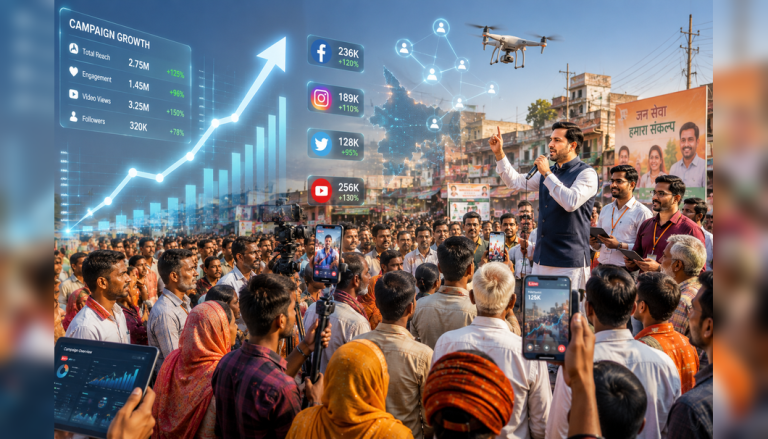

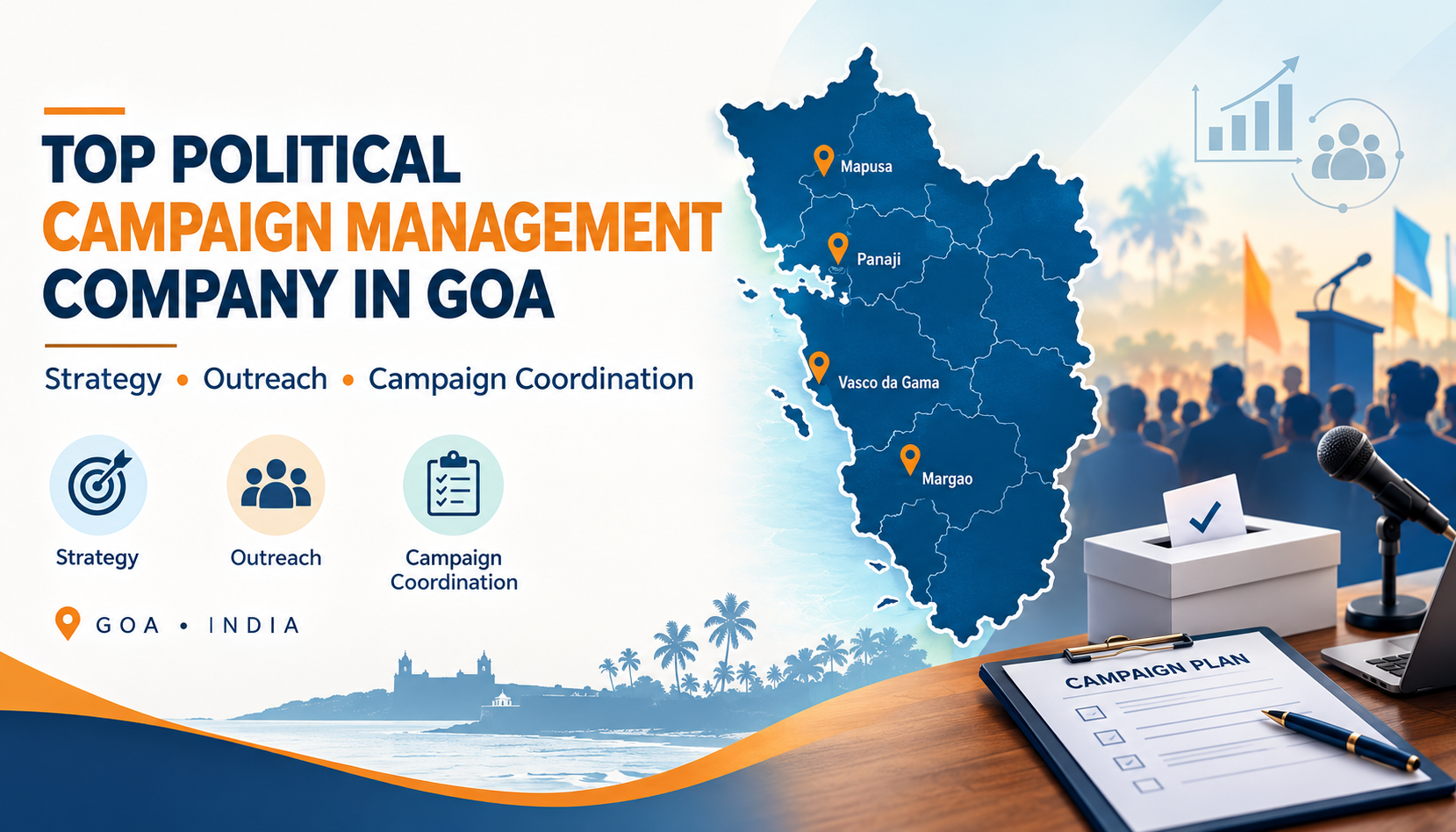
Forty seats. A majority mark of 21. And a habit, election after election, of deciding races by a few hundred votes. That’s not dramatic license; it’s just how Goa votes. In that kind of environment, a political campaign management company stops being an optional extra and starts being the thing standing between a seat won and a seat lost by 400 ballots.
So what does one of these companies actually do? This piece walks through the research, ground teams, digital push, polling, and the mistakes that quietly cost candidates seats.
What Is a Political Campaign Management Company?
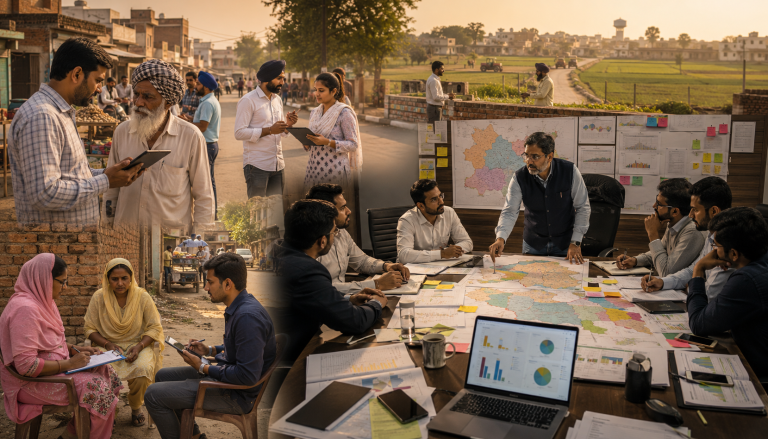
A political campaign management company is hired for the operational side of a campaign. Research, booth management, volunteer coordination, messaging, media buying, and these days, social media election management in Goa as a full workstream of its own.
The candidate is the face. Someone else decides which villages get door-to-door visits this week, which WhatsApp group hears which version of the message, and where support is quietly leaking away. That invisible second job is what these companies are built to do.
And it’s not city-only work. Goa has 40 assembly constituencies running from dense urban stretches around Panaji to hinterland seats where everybody genuinely knows everybody. I’ve seen campaigns run identical messaging across coastal Salcete and interior Sanguem and wonder why half of it fell flat.
Why Goa Needs Campaign Management Ahead of the 2027 Assembly Election
The Goa Assembly election is expected in February 2027. Chief Minister Pramod Sawant said as much in August 2026, adding that the final schedule sits with the Election Commission of India. The current Assembly was elected on 14 February 2022 and its five-year term runs out around early 2027.
Why does that matter more than a year out? Model Code of Conduct restrictions land the moment the election is announced, usually four to six weeks before polling day. Rallies, ad spend, even social media activity get harder to move once that clock starts, so the strategic work has to happen before the announcement.
Goa’s numbers back this up. In 2022, the BJP won 20 of 40 seats on 33.3% of the vote, barely up from 32.5% in 2017, yet picked up seven extra seats. Congress took 11 seats on 23.5%, down almost five points and six seats. AAP went from zero seats to two on just 6.77%, proof that a tight, well-targeted push in the right pockets beats broad but shallow name recognition. Turnout was 81.89%. Small shifts, disproportionate seat swings. That’s why constituency-level work beats a glossy state-wide strategy deck.
How a Political Campaign Management Company in Goa Works
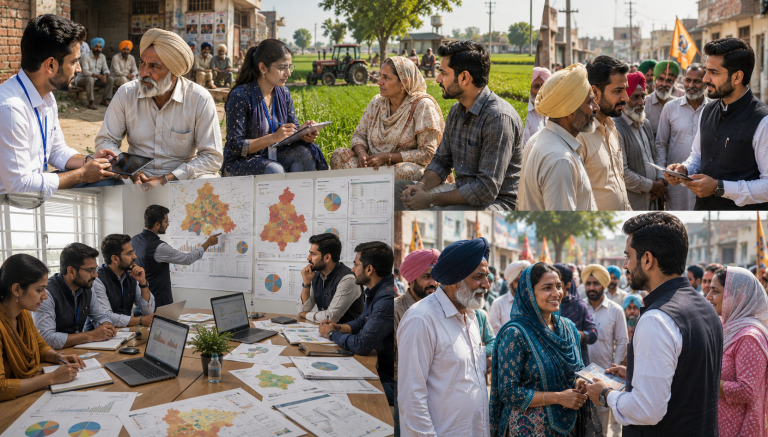
Most engagements follow roughly the same shape. First comes baseline research: past voting patterns, community composition, local grievances, and wherever the incumbent looks weakest. Then, ideally early, an opinion poll survey across constituencies, because a real survey tells a campaign where it stands before a single rupee goes into messaging. Skip it, and you’re campaigning on assumption.
Next is message building. What does the candidate stand for, in one line a voter could repeat to a neighbour over tea? That gets tested against real people.
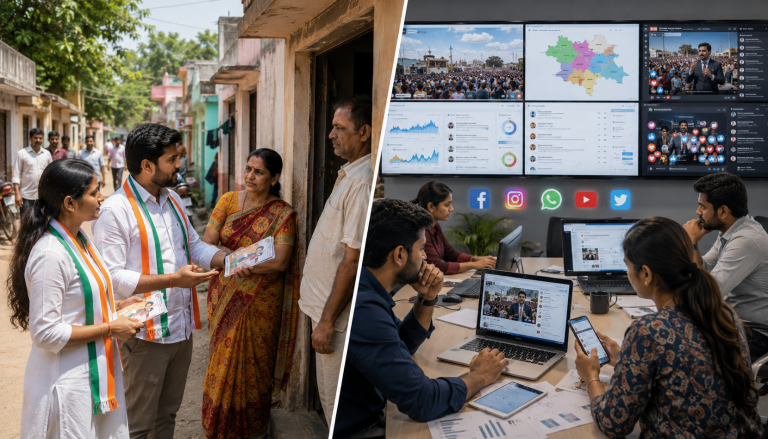
Then the work most people don’t see: booth-level volunteers, local coordinators, door-to-door rounds. This still wins elections in Goa. Digital hasn’t replaced it, it’s added to it. Alongside that runs social media election management, split by constituency, language (Konkani, Marathi, English) and age group. Mid-campaign, a second round of polling or honest ground feedback shows what’s landing and what’s dead weight. In the final stretch, it’s turnout drives, last-mile messaging, and staying inside Model Code of Conduct spending rules.
Key Benefits and Real Limitations
Hiring this kind of team buys concrete things. Research methods individual candidates couldn’t run alone. One structured message instead of ten from local leaders. A faster response when a rival moves or a local issue flares up. Compliance support, since spending and messaging rules in Indian elections are easy to breach without meaning to. And social media handled by someone tracking platform changes rather than, as one candidate’s aide put it to me, “my nephew who’s good with Facebook.”
The limitations don’t disappear, though. No company manufactures support that isn’t there; good management sharpens a real case, it doesn’t invent one. Digital reach still hits ceilings in parts of rural Goa, so social media can’t fully stand in for groundwork. Opinion polls carry margins of error, especially in constituencies where a few hundred voters can flip the outcome. And a properly run operation isn’t cheap. Candidates who treat the budget as an afterthought usually regret it by week two.
Core Strategies: Social Media and Opinion Polling
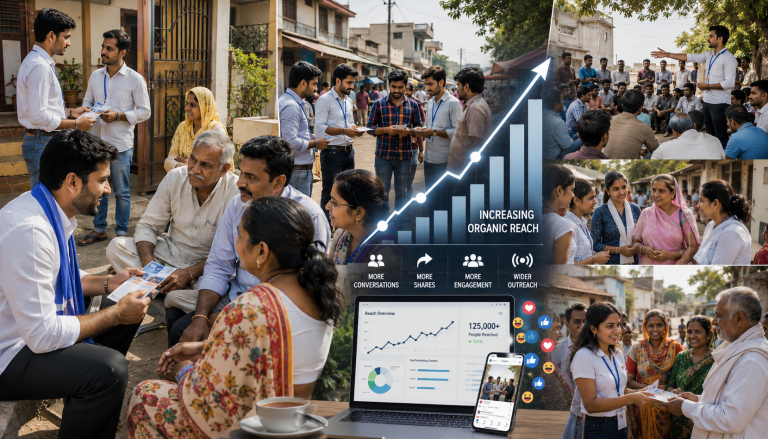
Social Media Election Management in Goa
Paid and organic activity across Facebook, Instagram, YouTube, and WhatsApp, run constituency by constituency rather than as one blanket push. India crossed roughly 886 million active internet users by 2024, growing 8% year-on-year, according to a joint IAMAI and Kantar report. Internet penetration reached about 70% of the population aged 15 and above, per a National Statistics Office figure referenced in late 2025. Goa ranks among the more literate and urbanised states, which usually tracks with higher digital reach, though no Goa-specific, government-sourced penetration figure was available for this piece.
Opinion Poll Survey for Goa
A pre-election survey across sample constituencies, gauging sentiment, issue priorities, and name recognition. This is not an exit poll, legally or practically. Under Section 126A of the Representation of the People Act, 1951, exit polls can’t be conducted or published during any period the Election Commission notifies, and breaching that can mean up to two years in prison or a fine. Opinion polls taken before voting don’t fall under that ban. Section 126, though, stops any “election matter,” opinion poll results included, from airing on electronic media during the 48-hour silence period before polls close. Getting this wrong is a legal problem, not an awkward correction.
Ground Canvassing vs Social Media Election Management: A Comparison
| Feature | Ground Canvassing | Social Media Election Management |
| Reach | Limited by volunteer hours and geography | Broad, fast, scales across a constituency in days |
| Trust built | High, face-to-face builds it fastest | Moderate, hinges on content quality and consistency |
| Cost per contact | Higher, labour-intensive | Usually lower per person reached |
| Targeting precision | Rough, based on local knowledge | Sharp, by age, language, location, interest |
| Speed to adjust message | Slow, needs volunteer retraining | Fast, content shifts within hours |
| Effectiveness with older or rural voters | Strong | Weaker, though closing the gap as smartphone use spreads |
| Legal sensitivity | Lower, mostly local permission rules | Higher, needs compliance with ECI social media guidelines and MCC |
Best Practices and Common Mistakes
Run the opinion poll survey early, not two weeks before the Model Code of Conduct lands, when it’s a formality rather than a strategy tool. Localise everything; a message that lands in Panaji can flop in Canacona. Keep social media tone consistent across platforms. Train volunteers on what they can and can’t say, especially around spending limits, because most violations are accidents. Track sentiment weekly. And budget for compliance and legal review, because that line item isn’t optional.
On the mistakes side: treating one opinion poll as gospel rather than a snapshot that ages fast. Skipping Konkani and Marathi content for English-only messaging, which quietly writes off a real share of voters. Pouring money into paid ads while under-staffing ground coordinators. Missing ECI disclosure rules for pre-poll surveys, including sponsorship and methodology, which the Press Council of India has flagged as a requirement during election periods. And waiting until the final month to build any digital presence, forgetting that trust online takes time to earn, same as offline.
Conclusion
Goa elections come down to a handful of votes in seat after seat. A political campaign management company in Goa exists so a candidate isn’t losing those votes to disorganisation, a muddled message, or a digital push that never reaches the people deciding the outcome. Ground work, social media election management, and an honest opinion poll survey in Goa are three parts of one job. With the Goa Assembly Election expected in February 2027, the research and ground-planning window is open right now. Get in touch for a constituency-level consultation and see what a properly run opinion poll survey tells you, before a single rupee goes into messaging.