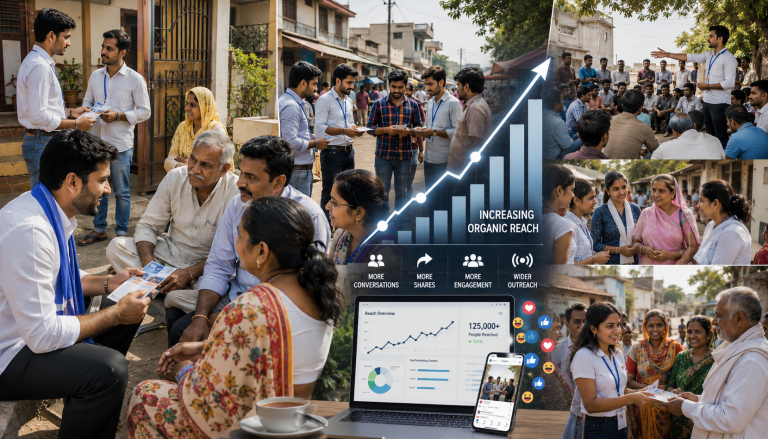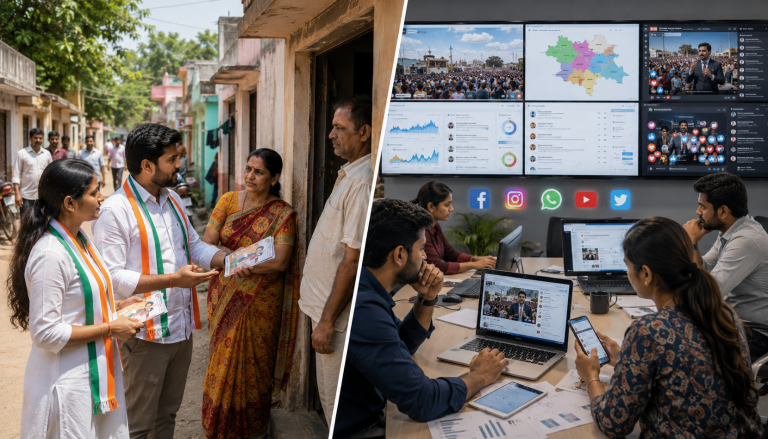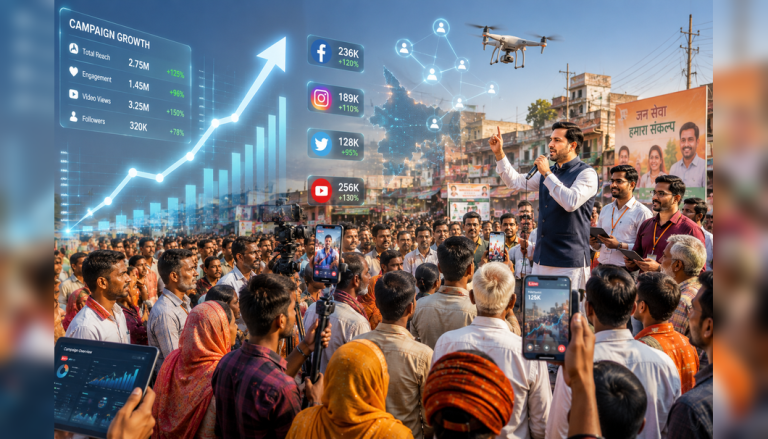

- Running a political campaign in Uttar Pradesh is not just about scale — it is about managing complexity at scale. With 403 constituencies, vast demographic diversity, layered caste structures, and highly localised political behaviour, elections in the state are shaped by thousands of parallel contests rather than a single statewide narrative.
- Unlike smaller states, where a uniform wave can sometimes determine outcomes, Uttar Pradesh requires campaigns to operate simultaneously at multiple levels. What works in Western UP may not resonate in Purvanchal, and strategies that succeed in urban constituencies may fail in rural belts. This makes coordination, adaptability, and precision absolutely critical.
- Traditional methods such as rallies, local outreach, and grassroots mobilisation continue to play an important role, but they are no longer sufficient on their own. Modern campaigns are increasingly defined by data-driven insights, structured execution, and the ability to respond quickly to changing voter sentiment.
- This is where political campaign management becomes essential. It provides a framework that allows campaigns to move beyond reactive decision-making and operate with clarity, discipline, and measurable strategy, ensuring that every effort contributes to a larger, well-coordinated objective.
Uttar Pradesh Elections 2027: Political Landscape, Power Equations and Voter Shifts
The Uttar Pradesh Assembly Elections 2027 are expected to be defined by multi-layered competition rather than a clear wave election. The state’s electoral behaviour has evolved significantly over the past decade, with voters increasingly balancing identity-based preferences with governance expectations.
- The Bharatiya Janata Party(BJP) enters the contest with the advantage of incumbency, a strong organisational network, and a track record of welfare delivery. Its strategy is likely to focus on maintaining its broad coalition by combining welfare narratives with targeted outreach among non-Yadav OBC groups, non-Jatav Dalits, and women voters. At the same time, managing anti-incumbency at the local level – particularly against sitting MLAs – will be a key challenge.
- The Samajwadi Party(SP) is expected to position itself as the primary challenger by consolidating its traditional base while attempting to expand its appeal among non-core voters. Its success will depend not just on narrative-building but on its ability to translate support into effective booth-level mobilisation, which has historically been a decisive factor in the state.
- The Bahujan Samaj Party(BSP) continues to occupy a strategically important position. Even without dominating seat counts, its stable vote base – particularly among Jatav voters – has the potential to influence outcomes in a large number of constituencies by altering vote margins.
- The Indian National Congress(INC) remains in a rebuilding phase. While it may not emerge as a primary contender across the state, its presence could affect electoral arithmetic in specific regions, particularly where contests are already tight.
What makes Uttar Pradesh particularly complex is its regional fragmentation. Western UP often responds to agrarian concerns and community dynamics, Purvanchal is heavily influenced by caste alignments and local leadership networks, Awadh reflects governance perception and administrative delivery, while Bundelkhand continues to vote around development deficits such as water scarcity and migration. These regions do not swing uniformly, which means campaigns must operate with region-specific strategies rather than a single statewide message.
Voter behaviour is also undergoing a shift. Welfare schemes continue to play a significant role, especially among economically vulnerable groups, but there is a growing emphasis on aspiration – jobs, income stability, and long-term development. Women voters are emerging as a more decisive electoral force, often responding to targeted welfare delivery and safety-related narratives. At the same time, a large youth population is making employment, education, and digital engagement central to campaign strategies.
Another defining feature of the 2027 elections is likely to be vote fragmentation. Multi-cornered contests, combined with the first-past-the-post system, mean that even small swings in vote share can produce disproportionate changes in seat outcomes. In many constituencies, margins are likely to be narrow, making booth-level precision and turnout management more important than broad popularity.
In this environment, elections are not won through momentum alone. They are won through continuous monitoring, local adaptability, and disciplined execution across thousands of micro-level units. Leadtech India are pioneers in data-backed election campaign management and therefore, the true road to success.
Political Campaign Management Explained: Structure, Strategy and Execution
- Political campaign management is the process of bringing every element of a campaign into a structured and coordinated system. It involves planning, executing, monitoring, and continuously refining campaign activities to ensure that they remain aligned with overall objectives.
- In practical terms, this means integrating voter data, communication strategies, resource allocation, and on-ground operations into a single framework. Instead of working in silos, different parts of the campaign operate in sync, allowing for better coordination and more efficient decision-making.
- In a state as large and complex as Uttar Pradesh, this structure is not optional. Without it, campaigns often struggle with fragmented information, delayed responses, and inconsistent execution. With it, they gain the ability to track performance in real time, identify gaps quickly, and adjust strategies based on actual ground realities rather than assumptions.
- This is where Leadtech India comes in – paving the way for a successful campaign with proper structure, strategy and thorough research & ground-study by industry experts, Leadtech runs campaigns like no other – ensuring impeccable results each & every time.
Strategic Campaign Planning for Uttar Pradesh Elections 2027: Why It Is Critical for Electoral Success
- Strategic planning in Uttar Pradesh requires a multi-layered approach that accounts for the state’s diversity and scale. Campaigns must simultaneously manage state-level narratives, regional variations, constituency-specific issues, and booth-level dynamics.
- This involves identifying key voter segments, understanding local concerns, and tailoring messaging accordingly. It also requires aligning on-ground activities with broader campaign goals, ensuring that every action contributes to a cohesive strategy.
- Leadtech India ensures that effective planning also includes preparing for uncertainty. Elections are dynamic, and voter sentiment can shift rapidly due to political developments, local issues, or external events. Campaigns that are able to adapt quickly while maintaining strategic consistency are far more likely to succeed.
Improving Campaign Efficiency in Uttar Pradesh Elections 2027 Through Structured Management Systems
- Efficiency becomes a critical factor when campaigns operate at the scale of Uttar Pradesh. Managing thousands of workers, volunteers, and local units requires a system that ensures coordination without creating bottlenecks.
- Campaign management systems address this by centralising workflows and creating clear communication channels. Information flows more smoothly, responsibilities are better defined, and tasks are executed with greater consistency.
- This reduces duplication of effort and minimises delays, allowing campaign teams to focus on execution rather than coordination challenges. Real-time monitoring further enhances efficiency by enabling decision-makers to respond immediately to changing situations on the ground.
Cost Optimisation in Uttar Pradesh Election Campaigns 2027 Through Data-Driven Decision Making
- Elections in Uttar Pradesh involve significant financial investment, but effective campaigns are not defined by how much they spend – they are defined by how well they allocate resources.
- Campaign management systems enable more efficient use of budgets by providing insights into which activities are delivering results and which are not. This allows campaigns to prioritise high-impact areas and reduce wasteful spending.
- Over time, this approach leads to better outcomes without increasing overall expenditure. It also reduces the risk of costly mistakes, ensuring that resources are used strategically rather than reactively.
The Role of Campaign Technology in Uttar Pradesh Elections 2027
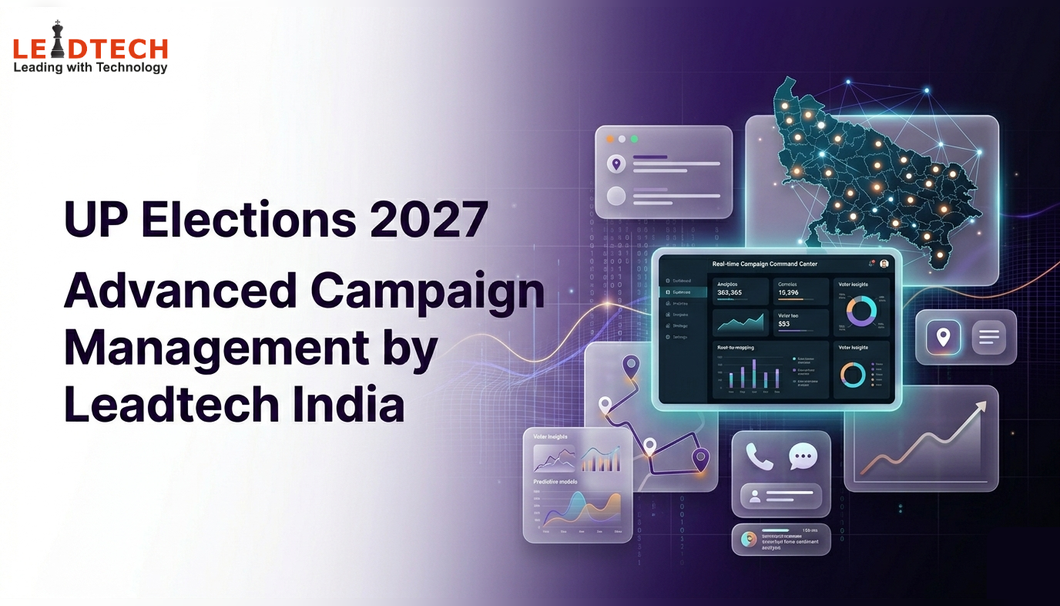
- Technology has become a central component of modern election campaigns, particularly in large states like Uttar Pradesh. Campaign management platforms allow teams to handle large volumes of data, coordinate activities across regions, and monitor performance in real time.
- These tools enable campaigns to operate at a granular level, tracking voter sentiment, managing booth-level outreach, and ensuring consistency in communication. They also improve accountability by providing clear visibility into campaign activities and outcomes.
- As electoral competition intensifies, the ability to leverage technology effectively is becoming a key differentiator between successful and unsuccessful campaigns.
Why Credibility and Structured Campaign Systems Are Critical in Uttar Pradesh Elections 2027
- In high-stakes elections, credibility is not built only through messaging – it is also shaped by how campaigns are managed. Structured systems create transparency, improve accountability, and ensure that decisions are based on reliable data.
- This strengthens internal coordination and builds confidence among stakeholders, including leadership teams, candidates, and supporters. It also enables campaigns to present a clear and consistent narrative, which is essential in a competitive political environment.
- Leadtech India with its expert team has the capacity to engage the voter base and ensure results are produced because data-backed problem solving & campaign structuring are the main components to their election management system.
Why Leadtech India Stands Out in Political Campaign Management for Uttar Pradesh Elections 2027
- Leadtech India combines technological capability with practical campaign experience, offering solutions that are both strategic and execution-focused. Its approach is designed to address the specific challenges of large-scale elections like those in Uttar Pradesh.
- By integrating data analytics, structured workflows, and on-ground execution, Leadtech enables campaigns to operate with greater precision and control. This ensures that strategies are not only well-designed but also effectively implemented at every level of the campaign.
The Road to Victory in Uttar Pradesh Elections 2027
The Uttar Pradesh Elections 2027 will be shaped by complex interactions between identity, governance, and local dynamics. There is unlikely to be a single dominant narrative; instead, outcomes will emerge from thousands of closely contested battles across the state. In such an environment, success depends on more than visibility or momentum. It requires precision, coordination, and continuous adaptability. Campaigns must be able to operate at scale while maintaining a sharp focus on local realities. Political campaign management in UP by Leadtech, provides the structure needed to navigate this complexity. It transforms large, unwieldy campaigns into organised, data-driven systems capable of delivering consistent performance. For any serious contender in Uttar Pradesh, it is no longer just an advantage – it is a fundamental requirement for success.
Frequently Asked Questions (FAQs)
- What is political campaign management and why is it important in Uttar Pradesh elections?
Political campaign management refers to the structured planning and execution of all campaign activities, including voter outreach, communication, data analysis, and resource allocation. In a state like Uttar Pradesh, where elections are highly complex and multi-layered, it helps campaigns stay organised, responsive, and effective. - How are Uttar Pradesh elections different from smaller states?
Uttar Pradesh elections are influenced by regional diversity, caste dynamics, and large-scale voter variation. Unlike smaller states, there is rarely a single dominant trend, and outcomes are often decided at the constituency and booth level. - What role does data play in modern election campaigns?
Data allows campaigns to understand voter behaviour, track sentiment, and optimise strategies in real time. It helps in targeting the right voter segments, improving communication, and making informed decisions throughout the campaign. - Can smaller candidates or parties benefit from campaign management systems?
Yes, structured campaign management helps even smaller candidates compete more effectively by optimising resources, improving coordination, and focusing efforts on high-impact areas. - How does campaign management software improve election outcomes?
Campaign management software enables real-time monitoring, better coordination, and more precise targeting. It reduces inefficiencies and allows campaigns to respond quickly to changing ground realities, which can significantly improve performance. - Why is booth-level strategy important in Uttar Pradesh elections?
Many constituencies in Uttar Pradesh are decided by narrow margins. Booth-level strategy ensures targeted voter outreach and effective turnout management, which can directly influence the final result.